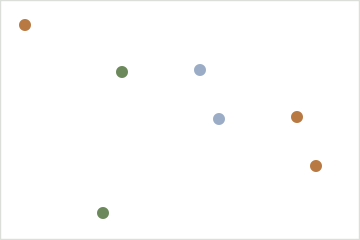
Isolated dots
Create the composition from a few separate dots whose positions establish their relationship.
ARTWORK FORM · 05 / 05
Shapes, marks, lines and color relationships lead without a definite object reference.
VISUAL FORMS · 63
Compare abstract point and line systems by isolation, clustering, direction, continuity, field density, convergence, and calligraphic energy.
Create the composition from a few separate dots whose positions establish their relationship.
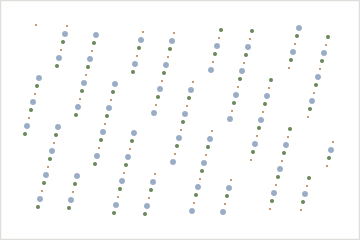
Use the gathering and dispersal of dots to establish areas of visual emphasis.
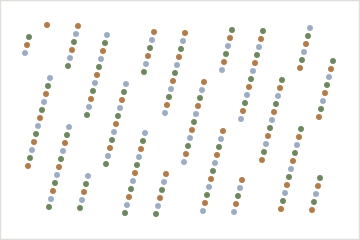
Spread dots at regular intervals until they read as a continuous field.
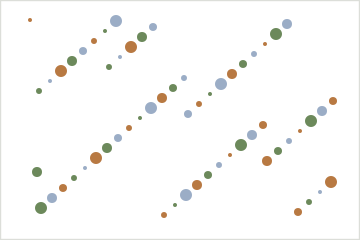
Build cloudlike changes in concentration from a large number of tiny dots.
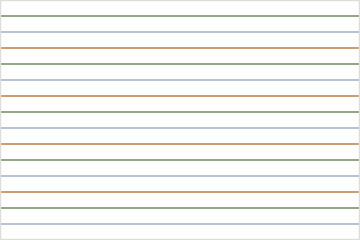
Create rhythm from parallel straight lines by varying their spacing and length.
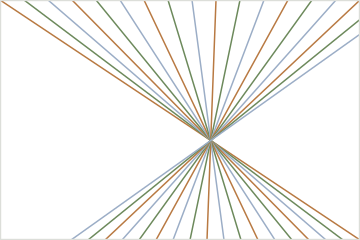
Cross several sets of straight lines to form a visible nonfigurative structure.
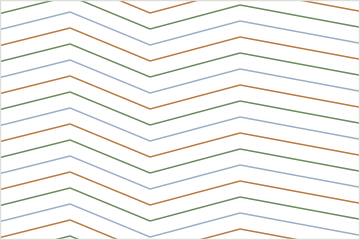
Use sharply turning line segments to create an angular rhythm.
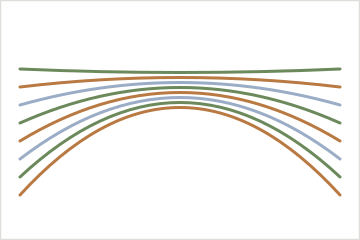
Combine lines with different curvatures into a soft formal relationship.
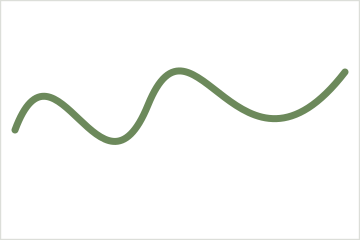
Run one or several uninterrupted curves across the entire field.
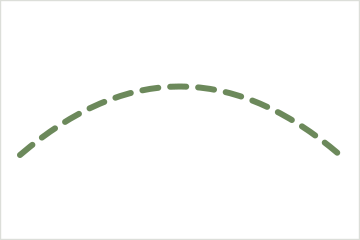
Create a beat through the interruption and resumption of line segments.
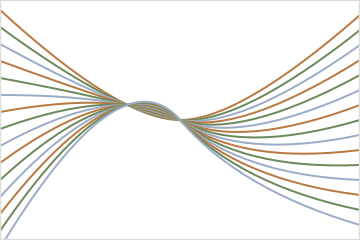
Converge several lines toward one or more focal points.
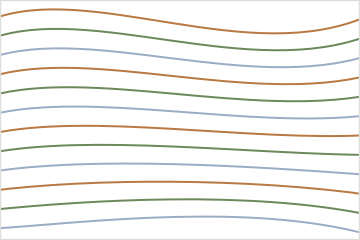
Arrange many curves like a wind field or directional current.
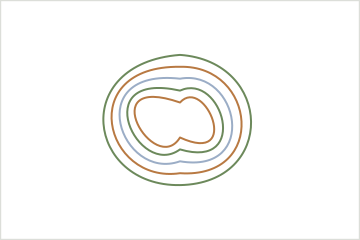
Use nested curves to express undulation and successive levels.
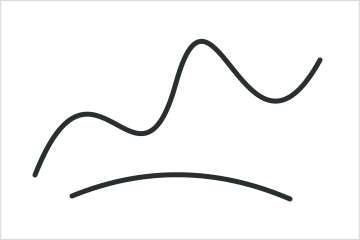
Preserve the speed and gesture of handwriting without forming text that must be read.
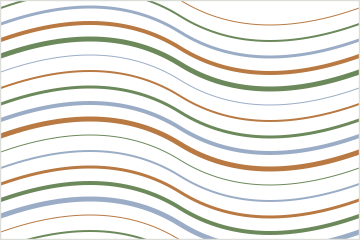
Change line width continuously to suggest force or spatial depth.
Compare abstract geometry through shape family, modular construction, grid logic, tiling, fragmentation, and hard-edged spatial relationships.
Make circles, semicircles, and arcs the principal formal relationships.
Compose right-angled blocks through deliberate differences in scale and position.
Use triangles and pointed directions to generate visual tension.
Join or overlap neighboring polygons until they read as one whole.
Organize elongated color blocks through changes in width, direction, and spacing.
Let a horizontal and vertical grid become the primary structure of the image.
Combine standard modules according to a limited set of rules.
Fit shapes directly against one another to create a continuous plane of modules.
Keep shape boundaries crisp, without soft transitions between neighboring colors.
Define shapes only with outlines while leaving their interiors open.
Distort geometric forms slightly while retaining both structure and a handmade character.
Slice planes apart, offset their pieces, and recombine them into a new arrangement.
Compare organic abstract forms through growth, flow, cells, foam, clouds, melting, waves, and other nongeometric deformation.
Build flat relationships from irregular shapes with softly rounded edges.
Compose the field from forms resembling cells or biological structures without depicting organisms.
Use fluid shapes to express direction and changes in apparent viscosity.
Coil forms inward toward or outward from a center of rotation.
Create continuous visual movement through periodic rises and falls.
Gather, separate, and interweave masses whose boundaries remain soft.
Grow forms outward according to a consistent branching rule.
Connect fine branches into an irregular rootlike network.
Divide the field into adjoining regions with flexible organic boundaries.
Compress circular bubbles of different sizes into layered foamlike clusters.
Stretch or drip forms as though the material were melting.
Create a rhythm of ridges and valleys from bent ribbonlike planes.
Compare gestural mark families by brush load, speed, pressure, wetness, repetition, splatter, scraping, and visible bodily action.
Build the image through the direction and coverage of broad brush sweeps.
Leave missing paint and exposed ground visible as evidence of bristles and speed.
Let pigment spread into wet areas and settle into soft edges.
Use droplets and outward spray marks to create an irregular rhythm.
Allow pigment to leave trails along gravity or a tilted direction.
Form broken lines by scraping away or dragging through applied material.
Cover color layers repeatedly while retaining visible traces of hand-made revision.
Accumulate many short strokes whose density and direction change across the field.
Use quick writing-like gestures to establish an abstract rhythm.
Leave continuous curves and overlaps through repeated circular smearing motions.
Repeat pressed marks that remain related but never exactly identical.
Create active negative shapes by removing or simulating the erasure of material.
Compare abstract color fields through palette count, temperature, value, gradients, bands, transparent overlap, glow, darkness, and optical vibration.
Cover a broad field with variations of a single hue.
Establish one clear formal relationship between two principal colors.
Organize several color fields through the boundaries where they meet.
Build the abstract structure from a hierarchy of light and dark values.
Let cool and warm color regions act upon one another.
Use complementary colors to create a strong visual confrontation.
Transition colors continuously until their boundaries nearly disappear.
Present color as parallel, interwoven, or curving bands.
Overlap translucent color blocks so their intersections produce new intermediate hues.
Make luminous or softly edged color regions the main areas of emphasis.
Place a few light points or bright regions within a predominantly dark field.
Set high-contrast colors beside one another to create optical vibration or instability.
VISUAL FORMS · 24
Compare abstract figure-ground construction through adjacency, opaque or transparent overlap, shared boundaries, masking, cutting, and reversals.
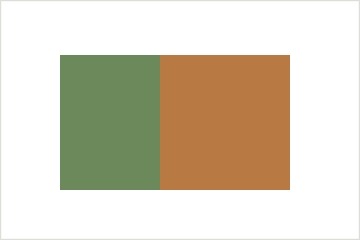
Place shapes against shared boundaries without allowing them to overlap.
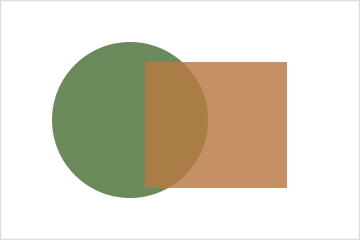
Build layers by letting opaque planes visibly obscure one another.
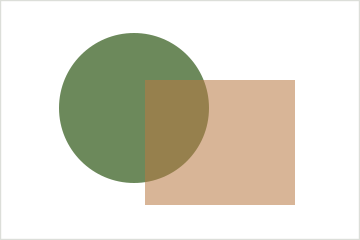
Keep both colors and contours visible within the region where translucent shapes overlap.
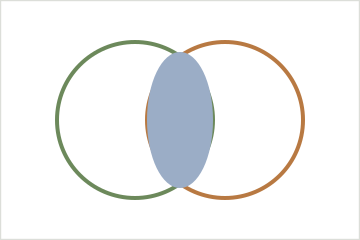
Retain only the area shared by the intersecting shapes.
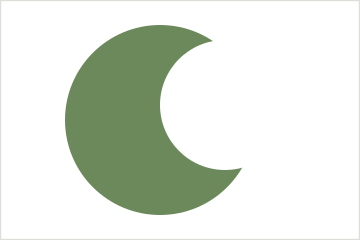
Remove the form of one shape from inside another.
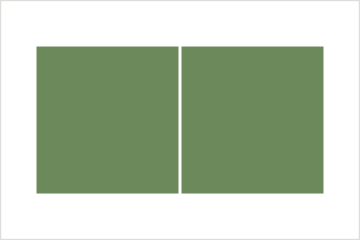
Use a single contour to define two neighboring regions at the same time.
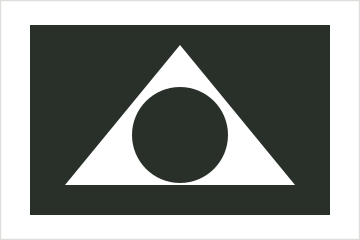
Give the solid forms and the surrounding empty areas equal visual importance.
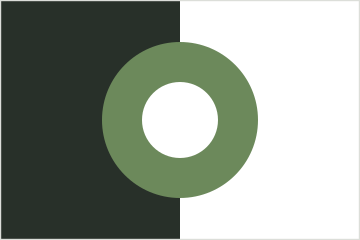
Make attention switch between shapes read as foreground and shapes read as background.
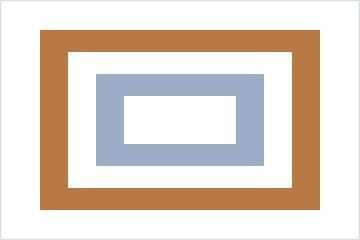
Open a window within one shape to reveal another layer of abstract content.
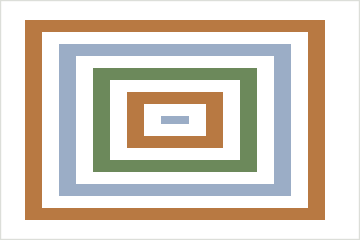
Nest shapes successively to create progression in scale or apparent depth.
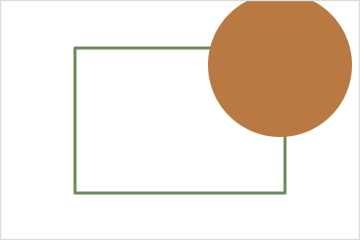
Let selected forms break through the grid or boundary that originally contained them.
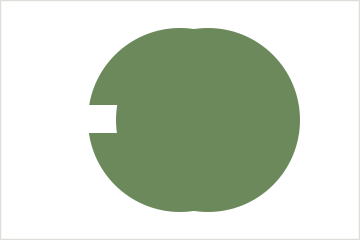
Cut a shape into pieces, then move or rotate the separated fragments.
Compare generated order through repetition, symmetry, glide, recursion, fractal growth, randomness, noise, parameter change, topology, and glitch rearrangement.
Repeat the same shape several times according to one consistent rule.
Rotate successive units around a shared center in an ordered array.
Correspond forms across one or several axes of reflection.
Combine translation and reflection within the same repeating operation.
Repeat related structures at several different scales within the same field.
Make local parts and the overall form share similar branching or hierarchical structures.
Vary positions randomly while restricting density and outer boundaries.
Introduce a small number of shifts and variations into an otherwise orderly sequence.
Convert continuous irregular numerical variation into visible density or color.
Change one selected parameter continuously across the field.
Emphasize how shapes connect to and pass through one another.
Create digital distortion through blockwise displacement, breaks, and repetition.
VISUAL FORMS · 34
Compare abstract balance through central, offset, paired, distributed, edge-enclosed, corner, diagonal, layered, columnar, and overlapping massing.
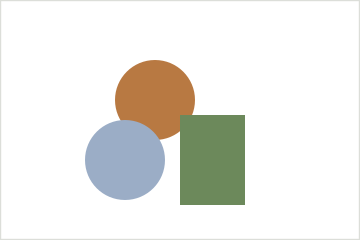
Concentrate the principal abstract forms near the center.
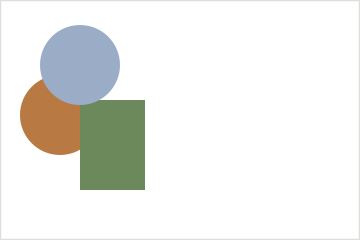
Move the forms toward one side while keeping the other side open.
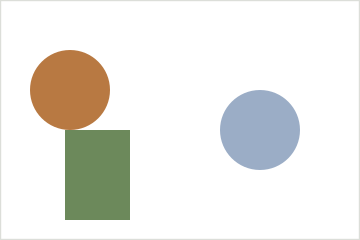
Set two principal masses in visual dialogue or conflict.
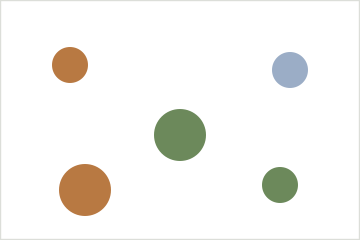
Build one whole from several independent centers of visual weight.
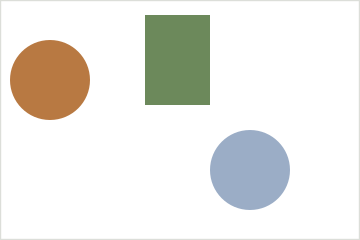
Scatter forms without a periodic pattern while balancing their overall visual weight.
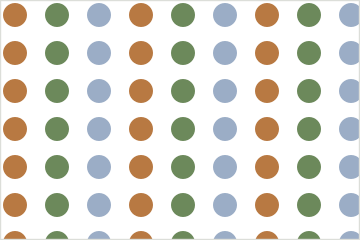
Cover most of the frame with forms and leave very little open space.
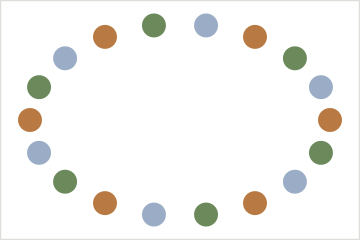
Concentrate content along the outer edges while preserving an open center.
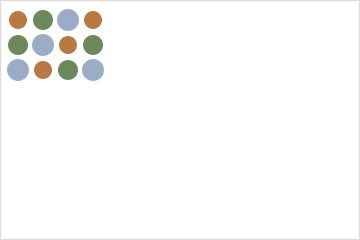
Gather the principal forms in one or several corners.
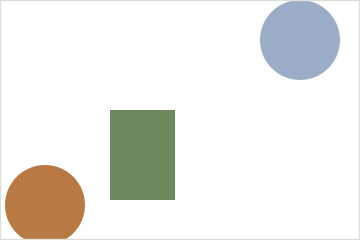
Pull the main visual weight apart along a diagonal direction.
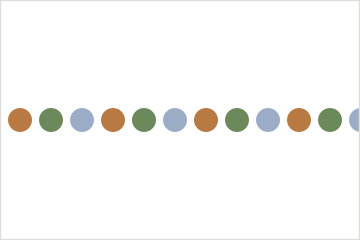
Unfold the content in successive horizontal layers across the full field.
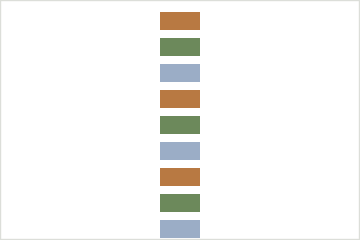
Organize the content into vertical columns or bands.
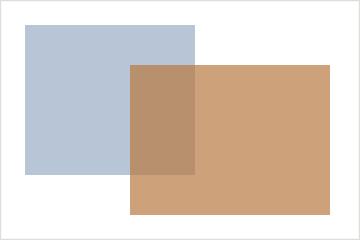
Divide the field into several zones, then allow those zones to overlap.
Compare abstract movement through even or alternating beats, progressive change, gathering, scattering, convergence, expansion, spirals, waves, and crossing forces.
Keep the intervals between units nearly equal to establish a steady beat.
Change the density of forms gradually along one direction.
Change each successive unit’s scale step by step.
Rotate each unit progressively through the sequence to create directional change.
Shift visual weight through a gradual progression of light and dark values.
Use length, size, or spacing to divide the composition into faster and slower passages.
Disperse forms outward from a cluster, or gather scattered forms back into one.
Aim lines and shapes toward one common center.
Expand forms outward from the center of the field.
Lead the gaze along a coiling spiral trajectory.
Move forms continuously along a rising and falling wave path.
Cross several directional forces to create visual tension.
Compare abstract space through flatness, overlap, perspective, floating mass, concave-convex illusion, impossibility, cropping, enclosure, and inside-outside continuity.
Keep all elements primarily on the same flat plane.
Create limited depth with only a small amount of occlusion.
Use regular converging lines to establish space extending into the distance.
Suspend forms without a clearly defined ground beneath them.
Use value or line relationships to suggest swelling and recessing surfaces.
Connect forms into a space that could not exist physically.
Crop shapes at the frame to imply that they continue beyond it.
Let paths inside the image lead outward into an open structure.
Use one boundary to gather all forms into a complete enclosed whole.
Move shapes or lines continuously between the inside and outside of a container.
AI DIRECTIONS
Use with an image, or ask AI to rewrite your image prompt in this direction.
Code-drawn studies compare composition and visual treatments; media and style examples are conceptual. These directions have not been individually tested with image models. Check generated text, transparency and repeat edges.