
Single event
Concentrate the image on one event visibly taking place in the present moment.
ARTWORK FORM · 03 / 05
A setting, a moment or a shared space gives the subjects context. Action is optional.
VISUAL FORMS · 60
Compare narrative states within a scene, from isolated moments and actions to causes, aftermaths, routines, conflict, and transformation.
Concentrate the image on one event visibly taking place in the present moment.

Capture one decisive pose, such as jumping, turning back, or catching a ball.

Use preparatory gestures and environmental clues to suggest what is about to happen.

Show the outcome through remains, facial expressions, or visible changes in the surroundings.

Depict an ongoing everyday activity such as eating, reading, or walking.

Establish a relationship through the characters’ distance, gazes, and poses.

Have several characters divide tasks while working toward one shared objective.

Create tension through confrontation, escape, or pursuit within the scene.

Express a relationship through caregiving, waiting, or quietly sharing the same space.

Gather a group around a birthday, festival, anniversary, or other commemorative occasion.

Show characters entering an unfamiliar place or discovering a new object.

Make the road, traveling group, and destination together define the journey.

Use successive stages of the same subject’s change as the main content.

Suggest cyclical life through repeated actions or recurring changes in the environment.

Describe a state through subjects and surroundings without showing an obvious event.

Keep the crucial cause or result outside the frame so visible clues invite interpretation.
Compare everyday settings by social use, objects, occupants, and the kind of ordinary activity each space supports.
Combine furniture, everyday possessions, and characters to establish a lived-in home interior.
Suggest daily life through tabletop objects, signs of use, and a localized patch of light.
Use a window, sightline, and the relation between inside and outside to create quietness.
Let tools, materials, and visible working gestures explain the activity.
Build a learning environment from desks, bookshelves, or classroom relationships.
Organize stalls, goods, and exchanges between people into a market scene.
Use a dining table, food, seating, and conversation to create a shared gathering space.
Combine building fronts, roads, and pedestrians to portray everyday urban life.
Set vehicles and platforms around characters who are waiting or moving through a station.
Bring facilities, equipment, and active characters together in a sport or play scene.
Use plants, walls, paths, and resting areas to shape an outdoor domestic space.
Combine cultivation, harvest activity, animals, and fields in one agricultural scene.
Define an outdoor stopping place with a tent, fire, or picnic equipment.
Use a performance area, audience, and lighting to establish the act of watching.
Show workstations, machinery, raw materials, and character actions as one production process.
Use abandoned objects and traces of time to imply that people were once present.
Turn a patch of moss, tree hollow, or flower bed into a complete miniature world.
Create a home or activity space with everyday functions governed by fantastical rules.
Compare natural and built environments by terrain, enclosure, scale, circulation, architectural type, and relationship to water or vegetation.
Build the main space from mountain masses, valleys, and strong changes in elevation.
Layer trunks, canopy, clearings, and forest floor to create depth inside the woods.
Use low open land beneath a broad sky to suggest a large-scale landscape.
Organize the natural setting through shorelines, water flow, or reflections.
Establish the coast through shoreline contours, tides, rocks, or boats.
Use the water body, suspended particles, and marine life to create underwater depth.
Shape the space with dunes, exposed ground, and isolated landmarks.
Organize the environment through ice sheets, snowfields, and cold reflected light.
Create an enclosed underground space from rock walls, openings, and localized lighting.
Use cloud layers, flying subjects, or suspended structures to form an aerial environment.
Make celestial bodies, orbital paths, and cosmic scale the principal content.
Show the building’s mass, facade, and surrounding outdoor space together.
Construct the interior from walls, openings, furnishings, and paths through the room.
Unify a skyline through the height rhythm of buildings against the sky.
Combine surviving architecture, its surroundings, and traces of time to define a historic place.
Organize imaginary terrain or architecture with consistent internal spatial rules.
Compare the same scene under different times, seasons, weather, visibility, and atmospheric conditions rather than changing its subject.
Use low, soft light and waking activity to convey the beginning of the day.
Show bright daytime through a high sun and clearly defined light and shadow.
Blend low warm light with a darkening environment to mark the transition into evening.
Organize the night scene through artificial lights set against dark spatial zones.
Let moonlight and low illumination dominate the mood and visibility of the scene.
Combine falling rain, wet traces, umbrellas, and reflections to make the weather evident.
Use falling snow, accumulated cover, and obscured surfaces to transform the space.
Lower distant contrast and soften spatial boundaries beneath layers of fog.
Align plants, clothing, and moving objects to reveal one consistent wind direction.
Show one place across seasons by changing vegetation, weather, and light.
VISUAL FORMS · 81
Compare camera or observer position through height, tilt, distance, subjectivity, framing devices, section views, and multiple viewpoints.

Set the viewpoint near the height of the characters or primary objects.

Look upward from below to strengthen the subject’s apparent mass or height.

Look down from an elevated position to reveal relationships across the ground.

Look almost straight down so the flat spatial layout becomes the main information.

View the scene diagonally from above, showing both ground distribution and three-dimensional volume.

Place the viewpoint against the ground so even small objects appear tall.
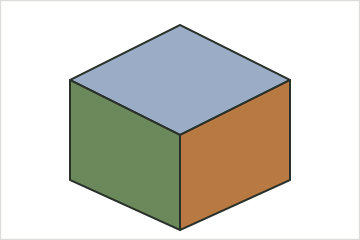
Use nearly parallel spatial axes to show a three-dimensional arrangement without strong convergence.

Direct the spatial lines toward one dominant vanishing point.

Use a building or spatial corner to establish two separate vanishing directions.

Converge the vertical dimension as well, intensifying the upward or downward view.

Frame only the area the character would see directly through their own eyes.

Keep a character’s shoulder and back in the foreground while looking toward the event.

View another space through a door, window, hole, or similar opening.

Observe the event from a distance so its activity reads within the larger environment.

Place the viewpoint among the characters to create a stronger sense of participation.

Set the viewpoint close to a natural surface to emphasize the spaces above and below it.

Remove obstructing surfaces to reveal the interior of a building or environment.

Combine different viewing directions within one scene and make their joins explicit.
Compare framing range by how much environment and subject detail remain visible, from extreme wides to intimate close-ups.
Keep people very small while allowing the broad environment to dominate.
Show the main environment, characters, and entire action area within one wide view.
Include only the environment necessary to understand the characters’ immediate activity.
Concentrate on local gestures and relationships between nearby characters.
Crop to an object or action detail that implies the complete situation.
Use a wide horizontal frame to unfold both environment and activity.
Use height to reveal floors, a valley, or action moving vertically.
Gather the principal scene within a relatively balanced square frame.
Crop events and surroundings at the edges to imply a space larger than the frame.
Define the view with a foreground doorway, branches, or an architectural opening.
Compare spatial depth through layered planes, overlap, atmospheric recession, pathways, scale change, light zones, nested openings, and vertical levels.
Give the foreground, middle distance, and far distance their own recognizable content layers.
Keep characters mainly on one plane with the environment arranged like theatrical scenery.
Overlap several environmental silhouettes front to back like layered stage flats.
Use a road, river, or track to carry the eye into the distance.
Shrink similar objects progressively as their distance from the viewer increases.
Establish front-to-back space through a succession of partial occlusions.
Reduce detail and contrast in the distance while keeping nearby forms clear.
Separate depth layers with distinct zones of light and darkness.
Look through successive doorways, arches, or windows into deeper spaces.
Show indoor and outdoor space continuously through a shared opening.
Present aboveground, underground, or multiple building levels at the same time.
Organize the space in successive levels running upward and downward.
Let a nearby character and a distant landmark share equal thematic importance.
Alter relative scale deliberately to create a dreamlike or allegorical space.
Compare scene composition by focal placement, balance, directional path, framing, multiple activity centers, panoramic density, and setting-to-event scale.
Concentrate the event or most important object at the center of the frame.
Move the main event to one side while the other provides context or open space.
Build orderly spatial correspondence around a central axis.
Use different structures on either side while keeping their visual weights coordinated.
Arrange the characters and environmental focal points in a triangular structure.
Unfold both the event and surrounding space along a diagonal route.
Lead the gaze gradually along a road, sequence of figures, or curving landscape.
Organize objects around a central area of activity.
Direct roads, buildings, or actions toward one shared center.
Present different content continuously along one horizontal band.
Connect events along stairs, a waterfall, or another vertical path.
Include several independent but related centers of activity within one frame.
Distribute many small events throughout one continuous panoramic space.
Let the setting occupy most of the image while the event appears as a small detail.
Partially block the view with foreground forms that guide attention into deeper space.
Compare narrative sequencing across time, distinguishing single-frame implication, cause and effect, panels, recurrence, and parallel events.
Show the characters, action, and clues to the result together in one frame.
Use two separate areas to show the cause and its result.
Present successive stages of an event in multiple ordered panels.
Repeat the same place at different moments to reveal change over time.
Follow one character through different environments to connect a longer experience.
Let events develop continuously across an extended scroll-like image.
Repeat the character within one setting to represent several different moments.
Connect separate event nodes with the route taken through them.
Return the ending visually to the beginning so the narrative forms a loop.
Unfold several events simultaneously so they compare with or echo one another.
Separate memory and present time with clearly different layers or boundaries.
Display several phases of one action in their proper sequence.
Organize a journey or exploration through mapped positions and connecting routes.
Place the core event at the center and supplementary story fragments around it.
Compare scenes contained, clipped, collaged, or transformed by an enclosing object, silhouette, miniature world, or dreamlike boundary.
Place a complete miniature scene on its own patch of land or floating island.
Contain the scene like a model inside a box or cubic room.
Curve the landscape around a sphere to create a miniature planet.
Confine the whole scene within a recognizable outer silhouette.
Fit a complete environment inside an object such as a cup or bottle.
Remove exterior walls to reveal several rooms inside the same house.
Combine environmental fragments from different sources into one assembled scene.
Place different locations, times, or states beside one another for direct comparison.
Connect several recognizable environments through relationships that are impossible in reality.
Bring a realistic space and an invented world together along one explicit boundary.
AI DIRECTIONS
Use with an image, or ask AI to rewrite your image prompt in this direction.
Code-drawn studies compare composition and visual treatments; media and style examples are conceptual. These directions have not been individually tested with image models. Check generated text, transparency and repeat edges.