Guide chapters
On this page4
Abstract artwork / CREATIVE DIRECTION
Overlapping zones
Abstract regions divide the image and establish layers through intersections.
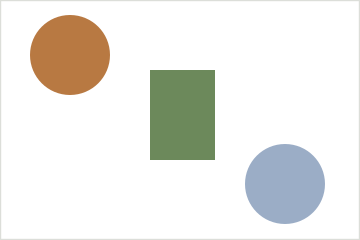
HOW TO RECOGNIZE IT
What defines this direction
Equal divisions and a regular grid are optional. Independent photographs shown side by side are not a nonfigurative zoned composition.
← Back to Abstract artworkAI DIRECTIONS
Take this direction into AI
Use with an image, or ask AI to rewrite your image prompt in this direction.
- Target direction
- Abstract artwork → Composition → Overlapping zones
- Input and output
- If given an image, adapt the image to this direction. If given a prompt, rewrite it as a complete prompt ready for image generation.
- Target structure
- Organize the input palette and forms into a few main regions. Build relationships through partition, overlap, crossing shapes or transparency.
- Background
- Reference background colors, rhythm and mood. If absent, create related supporting ground or spatial relationships. Figurative source surroundings may be simplified into supporting cues without replacing the nonfigurative composition.
- Wording
- Keep clearly readable source wording and its language, adapting its presentation. Do not claim to have recovered unreadable text. If no words are supplied, create a brief related phrase as supporting copy without obscuring key subjects, action or structure. Follow the target hierarchy for existing wording and respect an explicit request for no text.
- Preserve and adapt
- Retain theme, atmosphere, palette, rhythm or direction while allowing concrete object identity to be reduced or removed. Do not simultaneously require the original object silhouette to remain intact. Do not describe newly created content as present in the source. State a conflict between explicit input restrictions and necessary target conditions rather than claiming both were met.
- Scope and boundaries
- Equal divisions and a regular grid are optional. Independent photographs shown side by side are not a nonfigurative zoned composition.
Explore the background
These examples compare grounds within the same content family. Keep the current composition when applying a treatment; open an example for its full directions.

Transparent background
Abstract artwork: The ground stays transparent; a checkerboard is only a display aid.

Solid background
Abstract artwork: One uniform color forms the ground; white is also a solid background.

Gradient background
Abstract artwork: The backing changes continuously in color or brightness while the main content remains clear.

Patterned background: local
Abstract artwork: A decorative patch sits behind the content, leaving an area outside the patch.

Patterned background: full area
Abstract artwork: A patterned ground covers the image behind clearly readable foreground content.

Textured background
Abstract artwork: Paper grain, particles or another surface character support the foreground content.

Environmental background
Abstract artwork: A theme-related environment supports the main content from behind or around it.
Compare nearby directions
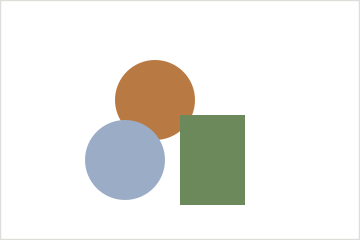
Central cluster
Abstract shapes gather near the center, with quieter surrounding space.
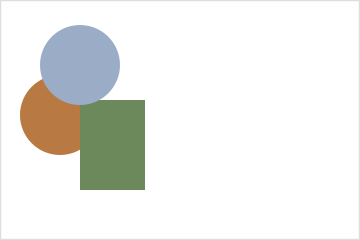
Offset abstraction
Abstract elements concentrate on one side, creating contrast with an open area.
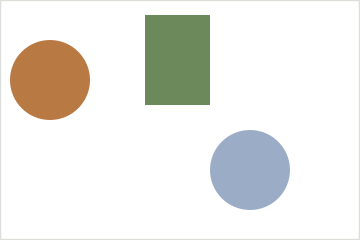
Free distribution
Abstract elements occupy varied positions without a periodic repeat.
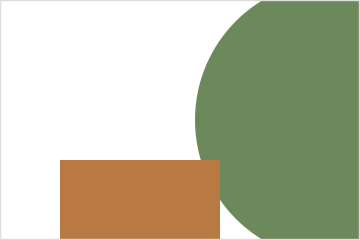
Cropped abstract forms
Forms extend beyond the image edges, suggesting a larger composition.
Code-drawn studies compare composition and visual treatments; media and style examples are conceptual. These directions have not been individually tested with image models. Check generated text, transparency and repeat edges.